
Powered By



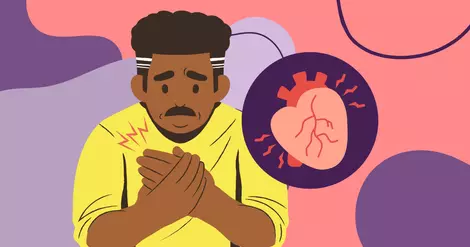
Shingles can increase your risk of a heart attack, and other cardiovascular events. But there is one relatively easy way to reduce your risk of heart attack or stroke: getting the shingles vaccine.
But what’s the connection between shingles and the risk of a heart attack? Read on to learn more about shingles, heart attack, and what you can do to protect your health.
Sign up to view the results!
 Continue with Facebook
Continue with Email
Continue with Facebook
Continue with Email
People who have had shingles have a nearly 30 percent higher risk of heart attack, stroke, or other cardiovascular event than those who have not had shingles.
Shingles is an infection that causes a painful rash along with other symptoms and can make you seriously ill. It’s caused by the varicella-zoster virus, the same virus that causes chickenpox. If you’ve had chickenpox, the virus stays in your body for the rest of your life. In some people, the virus can reactivate and cause shingles.
Getting shingles becomes more common as you age, and your risk of getting it is higher if you have any conditions or take any medications that affect your immune system. This increased risk is likely because our immune systems naturally weaken as we age. Shingles infection rates increase exponentially after age 50.
Scientists think that getting shingles can make heart disease worse, or even cause it, because shingles can lead to blood vessel damage, inflammation, and create blood clots that damage your cardiovascular system or create other problems.
The study which proved the shingles-heart disease link tracked people who had never had a stroke or coronary artery disease before, and found that those who had shingles faced increased risk of stroke and coronary artery disease. On average, the increased risk for a stroke lasted for 12 years or more after the shingles episode.
People with heart disease might face an increased risk of developing shingles as well.
The shingles vaccine protects your heart by preventing you from getting shingles, and in turn lowering your risk of blood vessel damage and other heart and cardiovascular harms that shingles can cause.

In the study of over a million people, people who got the vaccine had a 26 percent lower risk of a major cardiovascular event like a heart attack, stroke, or death from heart disease. The study also showed a 23 percent lower risk of cardiovascular events overall. The biggest reduction in risk happened in the two to three years after getting the vaccine, but results suggested that the vaccine can lower your risk for up to eight years.
The type of shingles vaccine from the study above, Zostavax, is no longer available in the U.S. The vaccine used now, which only uses certain parts of the virus, rather than a live virus, is called Shingrix. This vaccine has been proven to be more effective at preventing shingles and longer-lasting than the older version. The older, live vaccine, was also shown to be less effective in people over 70, and was not recommended for people with cancer or undergoing chemotherapy. The new vaccine does not have these limitations.
The shingles vaccine is recommended for all adults 50 and over. Adults over 19 may be eligible if they have a compromised immune system. People who got the old vaccine, which was discontinued in 2020, should receive the new one.
People who have shingles, people who are pregnant, and people who are allergic to the vaccine should not get vaccinated.
For the new vaccine, you’ll need two doses, two to six months apart. Side effects are typically minimal, but some people experience fatigue, headache, or stomach pain.
More MyHeartDiseaseTeam members are choosing the shingles vaccine, thanks to new research, and simply wanting to avoid a painful disease.
Taking care of your heart health is extremely important. If you think you might be having a heart attack, do not wait to get help. If you are experiencing chest pain, sweating, dizziness, or nausea, along with shortness of breath, or arm, back, or neck pain, call 911 or go to the nearest hospital. Never ignore signs of a heart attack.
It’s also important to go right to the doctor if you think you might have shingles. Getting antiviral drugs quickly might help you recover faster and avoid future complications. Shingles symptoms can include a painful and itchy rash, nerve pain, fever, chills, and upset stomach.
Shingles is contagious in that it can cause chickenpox for someone who’s never had it. Be sure to cover your rash in public, avoid scratching, wash your hands often, and stay home to avoid passing it to anyone else. Especially be cautious to avoid passing it to someone who might be pregnant or immunocompromised.
On MyHeartDiseaseTeam, people share their experiences with heart disease, get advice, and find support from others who understand.
Have you gotten the shingles vaccine? Let others know in the comments below.
Get updates directly to your inbox.



 Continue with Facebook
Continue with Email
Continue with Facebook
Continue with Email
Continue with Facebook
Continue with Email
Continue with Facebook
Continue with Email
Become a member to get even more





 Join
Join



 Your Privacy Choices

This is a member-feature!
Sign up for free to view article comments.
Is my heart now at risk . Fr having shingles ?
We'd love to hear from you! Please share your name and email to post and read comments.
You'll also get the latest articles directly to your inbox.