
Powered By



 Continue with Facebook
Continue with Email
Continue with Facebook
Continue with Email
The cardiovascular system is a complicated group of organs, consisting of the heart and blood vessels.
Conditions that affect the heart and blood vessels are often grouped together as cardiovascular disease because many people have more than one condition at the same time. Each of these diseases raises the risk of other heart and blood vessel diseases.
This article will focus on the relationship between hypertension, heart disease, and stroke so that you can better understand your own health. We’ll also discuss how to reduce your risk of developing other cardiovascular diseases.
High blood pressure develops when the force of blood against artery walls is consistently too high. A normal blood pressure is lower than 120/80 millimeters of mercury (mm Hg). When either the top number (systolic) or the bottom number (diastolic) is high, you may be diagnosed with hypertension.
Hypertension is often referred to as a “silent killer” because it often has no symptoms, but it can cause serious damage to your heart, blood vessels, and other organs over time. The condition can be characterized as primary (developing on its own) or secondary (due to another health problem).
 Hypertension is often referred to as a “silent killer” because it often has no symptoms, but it can cause serious damage to your heart, blood vessels, and other organs over time.
Your blood pressure may be considered uncontrolled if it’s above your target, despite taking medication.
Your blood pressure may be considered “resistant” if it stays above your target while you’re taking three different blood pressure medications at the highest doses you can tolerate. You may also be considered to have resistant hypertension if it takes four or more medications to control your blood pressure.
Some risk factors for primary hypertension include:
Although some of these risk factors are out of your control, making lifestyle changes such as eating a low-salt diet or exercising regularly can help reduce the risk of hypertension.
Having high blood pressure increases the risk of developing heart disease. There are a few explanations for this connection.
High blood pressure puts excessive force on the walls of your arteries, the blood vessels that send blood from your heart to your body. These usually elastic tubes can become thicker and less flexible after enduring this constant force.
This process, known as hardening of the arteries, can lead to atherosclerosis, in which fatty deposits (plaques) build up inside the artery walls. This further narrows the arteries and reduces blood flow throughout the body.
The heart has to work harder to pump blood against increased resistance in people with hypertension. Over time, this can lead the left ventricle — the main pumping chamber of the heart — to hypertrophy (become too thick).
As the heart muscle wall thickens, it also becomes stiffer, which affects its function. Left ventricular hypertrophy can increase the risk of heart failure, when the heart can’t pump enough blood to meet the needs of the rest of the body.
Hypertension increases the risk of coronary artery disease, which is the most common type of heart disease. Coronary artery disease occurs when plaques narrow or block the arteries that supply blood to the heart muscle, leading to angina (chest pain) during exertion, such as while exercising.
As coronary artery disease gets worse, chest pain may occur even at rest, which is a sign of a heart attack. A heart attack, also called a myocardial infarction, happens when the heart muscle doesn’t get enough blood. It’s a medical emergency that needs immediate care.
Hypertension can pose a serious risk to your brain. Stroke occurs when blood flow to part of the brain is disrupted by either a blockage (ischemic stroke) or bleeding (hemorrhagic stroke). Hypertension can increase stroke risk in a few ways.
High blood pressure damages the delicate vessels in the brain, speeding up plaque formation and raising the risk of blockages in the brain arteries. The blood vessels also become more likely to rupture or bleed.
Even a few minutes without blood flow to the brain can lead to lasting damage or be life-threatening.
Hypertension can cause more blood clots to form and block arteries in the brain, leading to an ischemic stroke.
Luckily, many of the prevention measures for the different heart diseases are the same. Managing high blood pressure is the key to reducing the risk of heart disease and stroke. Some essential prevention and treatment strategies include lifestyle changes and medical options.
Your heart health begins with your lifestyle. Whether you want to prevent hypertension or you’ve been living with heart disease for years, adopting a heart-healthy lifestyle can significantly lower blood pressure and the risk of complications. You can help protect your heart by trying to:
Sometimes lifestyle changes are enough to bring down your blood pressure. However, if that’s not sufficient, your doctor may recommend a variety of medications to manage it.
Unfortunately, high blood pressure can sometimes be tricky to control. If you have uncontrolled hypertension, you may need to take multiple medications or a different combination of medications than you’re currently taking.
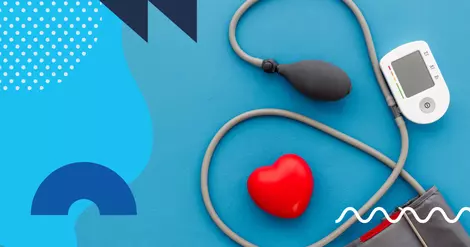
Regular blood pressure checks are essential for early detection and management of hypertension. Some insurance companies will send you a free blood pressure cuff. If not, you can find automatic cuffs at your local pharmacy.
Resources for monitoring blood pressure, including blood pressure trackers and fact sheets, can be found at the American Heart Association website.
If you have questions about hypertension, heart disease, or stroke, speak with your primary care doctor or cardiologist.
Regular follow-up appointments in combination with home blood pressure readings can help you and your medical team keep a close eye on your heart health and reduce your risk of complications such as stroke. A healthy diet, active lifestyle, and correct use of medical treatment can help keep your heart healthy.
Small changes can make a big difference in your overall well-being. Stay informed, be proactive, and take charge of your heart health. Even simple steps you take today can help protect your heart for years to come.
Stay informed, be proactive, and take charge of your heart health. Even simple steps you take today can help protect your heart for years to come.On MyHeartDiseaseTeam, people share their experiences with heart disease, get advice, and find support from others who understand.
Have you been diagnosed with hypertension or heart disease? Have you ever had a stroke, or are you worried about your risk of stroke? Let others know in the comments below.
Get updates directly to your inbox.


 Continue with Facebook
Continue with Email
Continue with Facebook
Continue with Email
Continue with Facebook
Continue with Email
Continue with Facebook
Continue with Email
Become a member to get even more





 Join
Join

 Your Privacy Choices

This is a member-feature!
Sign up for free to view article comments.
How Are Hypertension, Heart Disease, and Stroke Connected? Very informative article. I really enjoyed reading it...
We'd love to hear from you! Please share your name and email to post and read comments.
You'll also get the latest articles directly to your inbox.