
Powered By



 Continue with Facebook
Continue with Email
Continue with Facebook
Continue with Email
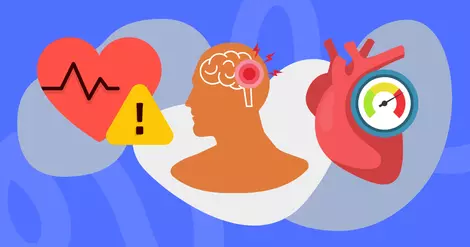
Hypertension (high blood pressure) can lead to serious health problems over time. Many people have trouble keeping it under control, even with treatment.
Here’s a closer look at what can cause uncontrolled hypertension and the symptoms that may occur.
Uncontrolled hypertension is blood pressure that remains above your target despite treatment.
Your blood pressure may be considered “resistant” if it stays above your target while you’re taking three different blood pressure medications at the highest doses you can tolerate, including a diuretic (a medication that helps the body remove extra fluid and salt). You may also be considered to have resistant hypertension if it takes four or more medications to control your blood pressure.
About 20 percent of people with high blood pressure have resistant hypertension.
There are many reasons why blood pressure can be hard to control. The following factors may contribute to uncontrolled or resistant hypertension.
Sometimes blood pressure stays high because of an issue with how medications are taken, their dosage, the medication combination, or their timing.
Possible issues include:
Talk with your doctor if you have concerns about your treatment plan, especially if it’s difficult to take your medication as prescribed. Don’t change your medication dose or timing without talking with them first.
Some medications and supplements can raise blood pressure or make blood pressure medications less effective.
The following medications and supplements may contribute to high blood pressure:
Talk with a healthcare provider about all the medications and supplements you take. This can help them identify anything that may be making your blood pressure harder to control.
Several personal factors can affect your risk of high blood pressure.
High blood pressure can run in families, suggesting a genetic link. As people age, their blood vessels can become stiffer and less flexible, which may raise blood pressure.
Patterns also vary by sex and age. According to the National Heart, Lung, and Blood Institute, men are more likely to develop high blood pressure in middle age, whereas women are more likely to develop it as older adults.
The institute also reports that Black adults tend to develop high blood pressure earlier and more frequently than White, Hispanic, or Asian adults. Some blood pressure medications may also be less effective for Black adults than for people in other groups.
Your blood pressure may be difficult to control because of another health condition. About 25 percent of people with resistant hypertension have an identifiable underlying medical cause.
Healthcare professionals call this secondary hypertension (high blood pressure caused by another condition). When there’s no clear medical cause, it’s usually called primary or essential hypertension.
Health conditions that may make hypertension hard to control include:
Smoking is a known risk factor for high blood pressure. Blood pressure also rises temporarily each time you smoke, and continuing to smoke after a diagnosis may make blood pressure harder to control.
Vaping (using e-cigarettes) may also affect heart and blood vessel health. In preliminary observational research, people who regularly vaped showed concerning changes in blood pressure, heart rate, blood vessel function, and exercise performance.
Some cardiovascular effects among people who vaped were similar to those observed among people who smoked cigarettes, even though the participants who vaped were younger and had used nicotine for less time. However, the research could not establish cause and effect, and the researchers could not directly compare the effects of vaping and smoking.
If you want help quitting smoking or vaping, talk with a healthcare provider about support options.
Drinking alcohol is associated with higher blood pressure, and heavier drinking may make blood pressure harder to control.
A large observational study found that cutting back on alcohol or stopping altogether was associated with lower blood pressure. Because the study was observational, it could not prove that the changes in alcohol intake caused the differences in blood pressure.
For some people, avoiding alcohol altogether may be part of managing blood pressure. Talk with your healthcare provider about what’s appropriate for you.
If you’re concerned about your alcohol use, consider talking with a healthcare provider or mental health professional. You can also visit FindTreatment.gov to look for support.
Most people with high blood pressure don’t experience symptoms. That’s why the condition is sometimes referred to as the silent killer.
A few people may experience nonspecific symptoms such as headaches, shortness of breath, or nosebleeds. These symptoms usually don’t occur until blood pressure has reached a severe or life-threatening level.
If extremely high blood pressure is causing organ damage — a hypertensive emergency — more serious symptoms may occur. These include:
Call 911 if you have these symptoms and a blood pressure reading of 180/120 millimeters of mercury (mm Hg) or higher. If you’re pregnant, seek emergency care if you have these symptoms and your blood pressure is 160/110 mm Hg or higher.
Hypertension can damage the walls of large arteries, such as the aorta and carotid arteries, as well as smaller vessels in organs such as the eyes. As this damage builds, blood flow becomes less efficient, and the heart has to work harder to pump oxygen- and nutrient-rich blood throughout the body.
This added strain can affect multiple parts of the body, including the heart, brain, eyes, and kidneys.
Over time, uncontrolled hypertension can increase the risk of complications such as:
It may also contribute to vision loss, chronic kidney disease (long-term kidney damage), and sexual dysfunction.

If your blood pressure remains above your target despite taking medication, talk with your doctor about different or additional treatment options.
Lifestyle changes may also be part of your treatment plan. Your healthcare provider can help you identify steps that support your overall health and may improve your blood pressure control.
On MyHeartDiseaseTeam, people share their experiences with heart disease, get advice, and find support from others who understand.
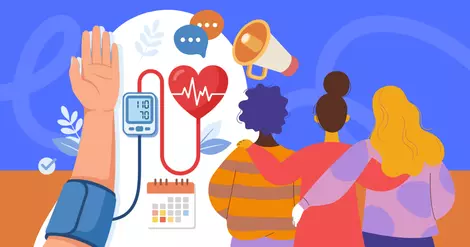
What challenges have you faced in controlling your blood pressure? Let others know in the comments below.
Get updates directly to your inbox.


 Continue with Facebook
Continue with Email
Continue with Facebook
Continue with Email
Continue with Facebook
Continue with Email
Continue with Facebook
Continue with Email
Become a member to get even more




 Join
Join

 Your Privacy Choices

This is a member-feature!
Sign up for free to view article comments.
I have had a hypertensive crisis and my symptoms were similar to a heart attack: chest and midback pain, gasping for breath, BP up to 200. It was no fun.
We'd love to hear from you! Please share your name and email to post and read comments.
You'll also get the latest articles directly to your inbox.