
Powered By



 Continue with Facebook
Continue with Email
Continue with Facebook
Continue with Email
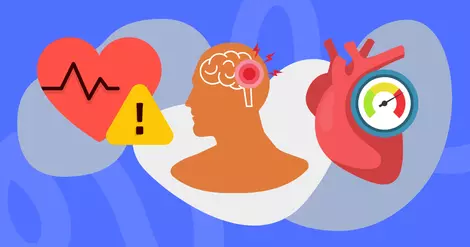
The quality of your sleep may be affecting your heart health. If you have sleep apnea, you may be more at risk for a heart rhythm disorder like atrial fibrillation (AFib). And if you have AFib, sleep apnea may be making your condition worse.
Sleep apnea occurs when your breathing stops during sleep. The airway gets blocked, or the breathing muscles don’t activate, depending on the type of sleep apnea you have. Either way, the result is the same: a lack of oxygen.
AFib is defined as an irregular heartbeat. Usually, it also feels like the heart is beating or fluttering rapidly. Left untreated, AFib can increase the risk of other heart conditions, including life-threatening conditions like blood clots in the heart, stroke, or heart failure.
Below are seven key facts to know about the connection between sleep apnea and AFib.
Sleep apnea is more common than AFib, but the two conditions are closely linked.
Studies show people with sleep apnea are two to four times more likely to have AFib, while about 50 percent to 80 percent of people with AFib also have sleep apnea.
Researchers have also found that AFib episodes are about 18 times more likely to occur after a “respiratory disturbance” (like sleep apnea) compared to regular breathing.
Sleep apnea increases your risk for more than just AFib. Not getting enough oxygen at night can also lead to other heart problems like hypertension (high blood pressure), stroke, coronary artery disease, and congestive heart failure (when the heart cannot pump blood efficiently).

AFib can also be a stepping stone toward additional heart problems. People with AFib have five times the risk of stroke and three times the risk of heart failure.
Sleep apnea isn’t the only sleep disorder that puts you at risk of AFib. Research shows insomnia and restless leg syndrome — a condition characterized by frequent leg movements while sleeping or trying to sleep — are linked to AFib too.
A 2023 study of military veterans found that insomnia increased the risk of AFib by 32 percent. Another group of researchers found that insomnia increased the risk of AFib among postmenopausal women.
Certain factors that increase your risk of sleep apnea can also increase your risk for AFib.
Overlapping risk factors include the following:
Using a continuous positive airway pressure (CPAP) machine — a common sleep apnea treatment — can improve AFib treatment outcomes. Catheter ablation is an AFib treatment that scars tissues around the heart to block the electrical signals that cause an irregular or rapid heartbeat. Catheter ablation doesn’t always work, but research shows people who use a CPAP machine are eight times less likely to experience ablation failure.
Cardioversion — an AFib treatment where rhythmic electrical shocks are sent through the heart — is also less likely to work long-term in people with uncontrolled obstructive sleep apnea.
Scientists have yet to solve the mystery of why AFib and sleep apnea are linked, but there are several popular ideas.
One hypothesis states that sleep apnea causes the cardiac autonomic nervous system — a network of nerves that controls how fast or slow the heart beats — to work harder than normal. When researchers blocked these nerves in animal studies, sleep apnea failed to trigger AFib.
Because sleep apnea periodically stops oxygen from reaching the brain, health experts are also exploring the possibility that changes in oxygen and carbon dioxide levels may affect the cardiac autonomic nervous system.
Physical stress to the heart could be another way that sleep apnea causes AFib. Animal studies show that the heart stretches and is exposed to excess pressure inside the chest when the airway is partially blocked.
There are two types of sleep apnea: obstructive sleep apnea and central sleep apnea. Obstructive sleep apnea occurs when muscles at the back of the throat relax, causing the airway to narrow. Central sleep apnea isn’t caused by a physical blockage. Instead, the brain doesn’t communicate properly with the muscles that allow you to inhale.
Although both are associated with AFib, research suggests a stronger link between central sleep apnea and AFib. Central sleep apnea is less common than obstructive sleep apnea.
Around 50 percent to 80 percent of people with AFib have sleep apnea, and up to 80 percent of people with sleep apnea remain undiagnosed. If you have AFib, you may have sleep apnea but don’t know it yet.
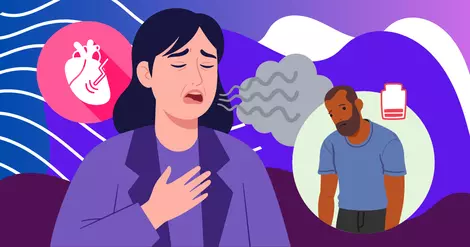
Snoring is one of the more obvious symptoms of sleep apnea, but if you sleep alone, you may not realize you snore. Some people with sleep apnea wake up gasping for air, which is a clear sign that you’re not breathing properly while asleep.
More subtle signs of sleep apnea include:
You may also want to get tested for sleep apnea if you have certain risk factors, like being an older adult or having obesity. According to Mayo Clinic, men are up to three times more likely to develop sleep apnea than women. The risk of sleep apnea increases in people who have gone through menopause or who have polycystic ovary syndrome or hormonal disorders.
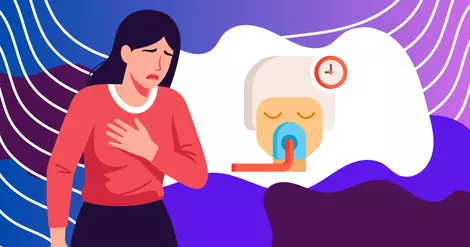
Sleep apnea tests can be administered in a clinical setting or at home. Your healthcare provider may also suggest visiting an ear, nose, and throat doctor to make sure you don’t have something blocking your airway. If you do have sleep apnea, you’ll likely be advised to use a CPAP or other airway pressure device.
On MyHeartDiseaseTeam, people share their experiences with heart disease, get advice, and find support from others who understand.
Do you have AFib and sleep apnea? Let others know in the comments below.
Get updates directly to your inbox.


 Continue with Facebook
Continue with Email
Continue with Facebook
Continue with Email
Continue with Facebook
Continue with Email
Continue with Facebook
Continue with Email
Become a member to get even more





 Join
Join

 Your Privacy Choices

This is a member-feature!
Sign up for free to view article comments.
I was diagnosed with sleep apnea just a month ago. I've been using a CPAP every night since. Then just a week or so after I began sleep apnea treatment, I was diagnosed with atrial flutter and put on… read more
We'd love to hear from you! Please share your name and email to post and read comments.
You'll also get the latest articles directly to your inbox.