
Powered By



 Continue with Facebook
Continue with Email
Continue with Facebook
Continue with Email
When you’re living with heart disease, wearing a heart disease bracelet can help you be prepared for possible emergencies, including serious events like heart attack and stroke. Depending on where an emergency happens, the people around you might not recognize what’s going on or know what to do.
A medical bracelet can help others quickly see that you have a heart condition and may need specific care. Read on for three important reasons why you or your loved one might consider wearing a medical ID bracelet.
A medical ID bracelet, also known as a medical alert bracelet, is used to communicate that you have a heart condition. It may list other vital information, such as medications you take to manage the symptoms of your condition or directions for a life-threatening emergency.
Sign up to view the results!
Continue with Facebook
Continue with Email
Cardiac events generally require emergency medical attention, so it’s important that the people around you understand what is happening and know what to do.
You or someone around you should call 911 right away if you have warning signs of a heart attack, stroke, or cardiac arrest.
Heart attack warning signs can include:
Stroke warning signs follow the acronym BE FAST:
Cardiac arrest symptoms include lack of responsiveness and no breathing.
A bracelet or other form of medical ID can quickly inform first responders or emergency department staff about your condition.
In one study, emergency physicians reported looking for medical information on the body or in a wallet more often than in a smartphone during emergencies, so a wearable ID or wallet card may be easier to find than phone-based information.
Generally, medical IDs are customized to reflect your unique health status. A medical bracelet may include:
When healthcare providers can rapidly access this information, it may help them choose safer care for you. For example, knowing that you take blood thinners may help them avoid medicines or procedures that could raise bleeding risk.
Wearing a medical ID bracelet or using another medical ID solution may help you feel more comfortable when you’re traveling to unfamiliar places or spending time with people who don’t know about your condition. It can be reassuring to know that key health details are easy to find.
A bracelet may be especially useful if you live alone, exercise outdoors, travel, or spend time in public places without someone who knows your health history. It can also help loved ones feel more prepared if an emergency happens.
A medical ID bracelet is one of the most recognized ways to communicate a health condition in an emergency. Bracelets are easy to wear and don’t require a battery.
There are additional options for medical IDs, including necklaces, ID cards, tags, pendants, key fobs, and wallet cards. Some people choose more than one option, such as wearing a bracelet and keeping a card in a wallet.
Heart disease jewelry is just one form of medical ID. Below are examples of other options you can choose from.
Some people use USB devices to store medical information. You can load PDFs of medication lists, medical documents, and other details you want healthcare providers to know. You can attach this to a dog tag, keychain, or wristband for easy access.
With USB medical IDs, keep in mind that your medical information should be kept private and secure. If you’re looking to buy a USB medical ID, ask how the device protects your information before you use it.
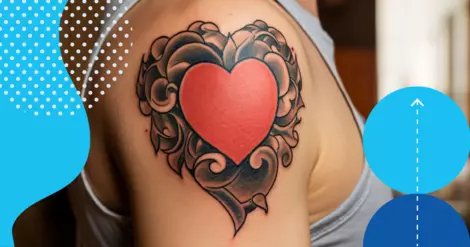
Some people opt for medical ID tattoos — tattoos that provide similar identifying information as traditional medical IDs. If that idea appeals to you, speak to your doctor to determine whether it’s safe for you to get a tattoo.
Since medical tattoos are not standardized in design or location, they may be missed by emergency responders.
Some smartphones have emergency apps or features that let people access certain medical information from the lock screen. This allows medical professionals to see your health information without needing a password for your phone.
If you have an iPhone, you can set up a smart medical ID by following Apple’s instructions. If you have an Android or other non-iOS phone, you may need to download an app. Simply search for “medical ID app” on the Google Play Store or your phone manufacturer’s app store.
There are some downsides to using your smartphone. Your phone may lose power, or you may not have it with you during an emergency. Emergency personnel may also be less accustomed to looking for this information on your phone.
In one study of emergency apps, researchers found that only 6 percent of surveyed emergency physicians routinely searched a smartphone for this information in nonresponsive people. This may improve, though, as these apps become more widely used.
If you use a phone-based medical ID, keep it updated and make sure trusted contacts know where to find it. You may still want a bracelet, necklace, or wallet card as a more visible option.
Before using any digital medical ID, check how your information is stored and who can access it. Make sure you’re comfortable with the privacy and security settings.
On MyHeartDiseaseTeam, people share their experiences with heart disease, get advice, and find support from others who understand.
Do you wear a medical ID bracelet or carry another form of medical alert? Let others know in the comments below.
Get updates directly to your inbox.


How can I order a medical I.d. bracelet?
 Continue with Facebook
Continue with Email
Continue with Facebook
Continue with Email
Continue with Facebook
Continue with Email
Continue with Facebook
Continue with Email
Become a member to get even more





 Join
Join


 Your Privacy Choices

This is a member-feature!
Sign up for free to view article comments.
Sherry sorry to hear about your condition, I’m 48 yrs old and had a heart attack 6 months ago. I struggle with depression too! Would be nice to have you for support
We'd love to hear from you! Please share your name and email to post and read comments.
You'll also get the latest articles directly to your inbox.